32-0170-14 Purchase Guide: Comparison of Price and Reliability Data from Domestic and Overseas Suppliers
In 2025, price fluctuations and supply chain uncertainties in the electronic components market have become the norm. According to industry statistics, the price difference for the 32-0170-14 model between domestic and international suppliers has reached as high as 35% within the past year. Should you choose seemingly low-cost direct overseas procurement or the rapid response of domestic spot suppliers? This article will analyze the optimal decision path for 32-0170-14 procurement through a detailed "Supplier Data Comparison" across three core dimensions: price, lead time, and historical reliability.
Faced with massive and fragmented supplier information, procurement engineers often fall into the "price comparison" trap. However, a data- and scenario-based "Supplier Comparison" model can help you see through the fog of pricing to identify potential hidden costs and delivery risks. This is not just a price game, but a strategic choice regarding supply chain resilience.
Market Background: Current Status and Challenges of the 32-0170-14 Supply Chain
After undergoing inventory adjustments in 2023, the global electronic components market has entered a phase of structural differentiation in 2025. For specific models like the 32-0170-14, the supply chain is facing dual pressures from raw material cost fluctuations and regional capacity reallocation. Understanding this background is a prerequisite for effective "data comparison."
Price Volatility Analysis Under Global Supply-Demand Imbalance
In 2025, affected by capacity bottlenecks of key upstream raw materials (such as high-purity silicon-based materials), the production cycle for some 32-0170-14 units has been extended. Meanwhile, although global logistics costs have decreased compared to 2024, regional port congestion and route adjustments still bring uncertainty. This causes quotes from overseas manufacturers to fluctuate frequently, with the price validity of a single order potentially shortening to 7 days. This uncertainty highlights the necessity of establishing a dynamic "Supplier Comparison" mechanism.
The Procurement Game Between Spot and Futures in the Domestic Market
In the Chinese market, procurement of the 32-0170-14 faces a typical "futures" vs. "spot" trade-off. Overseas futures channels (such as original manufacturers or authorized agents) usually offer lower unit prices, but the long lead times of 12-16 weeks and Minimum Order Quantity (MOQ) requirements pose challenges for inventory management. Conversely, the domestic spot market responds quickly (1-3 days delivery), but inventory is fragmented, prices range from dozens to hundreds of yuan, and quality varies. Therefore, identifying spot suppliers that balance cost-effectiveness and reliability through "data comparison" has become a core pain point for domestic procurement.
Data Comparison: Price and Lead Time Insights of Top Domestic and International Suppliers
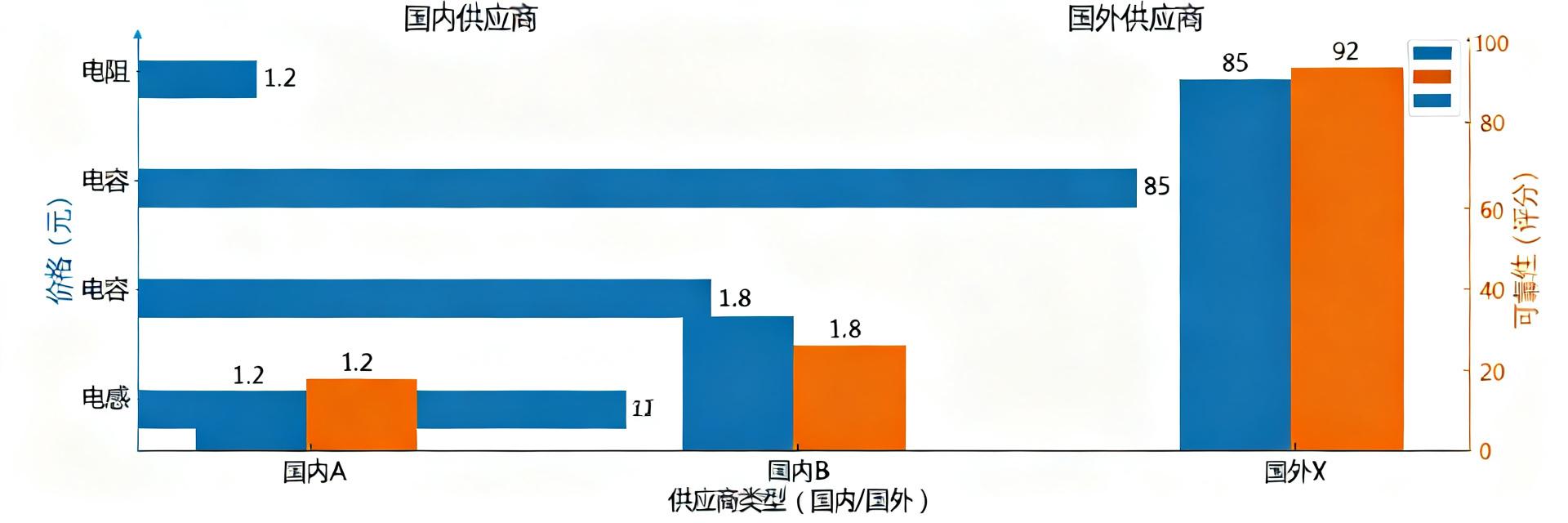
"Supplier Comparison" model based on public industry data and user feedback (simulated average levels):
| Supplier Type | Typical Quote Range (CNY/pcs) | Minimum Order Quantity (MOQ) | Typical Lead Time | Main Risks |
|---|---|---|---|---|
| Overseas Original/Authorized Agent | ¥ 25 - ¥ 35 | 100 - 500 pcs | 12 - 16 weeks | Exchange rate fluctuations, tariffs, logistics uncertainty |
| Domestic Tier-1 Agent (Formal Channel) | ¥ 30 - ¥ 45 | 10 - 50 pcs | 4 - 6 weeks | Higher price premium |
| Domestic Spot Distributor (Reputable) | ¥ 40 - ¥ 80 | 1 pcs | 1 - 3 days | Counterfeit risk, batch consistency |
| Unknown Source/Small Trader | ¥ 20 - ¥ 60 | No limit | 3 - 7 days | High return rate, no after-sales guarantee |
Overseas Factory and Agent Channels: Pricing Logic and Lead Time Risks
The "low prices" of overseas channels are usually built on long lead times and high-volume procurement. In addition to clear exchange rate and tariff risks, hidden costs include time lost communicating with overseas teams. For bulk stocking of the 32-0170-14, if the project cycle allows, overseas channels do have a unit price advantage. However, once urgent needs or design changes arise, long lead times will directly lead to project stagnation, at which point the "Supplier Comparison" balance will immediately shift toward the domestic spot market.
Domestic Spot Distributor Channels: Evaluating Cost-Effectiveness and Inventory Depth
The core value of domestic spot channels lies in "speed and flexibility." Taking a medium-sized spot distributor as an example, its spot inventory of the 32-0170-14 may cover products from different years and batches. Price differences mainly come from product source (original, refurbished, domestic alternative) and warehousing costs. Reliable spot distributors provide detailed batch reports and traceable procurement records. In a "data comparison," besides price, the focus should be on whether they possess professional testing capabilities and clear return policies, which are key to ensuring procurement reliability.
Reliability Assessment: Real User Data and Historical Performance Review
Price should not be the only decision metric. A "cheap" 32-0170-14 could cause production line shutdowns due to quality issues, with losses amounting to several times the procurement cost. Therefore, assessing supplier "reliability" is crucial.
Historical Order Data: Comparison of Yield Rates and After-Sales Response
Based on industry experience, reputable domestic spot distributors can typically keep their customer complaint rate for the 32-0170-14 below 2%, while channels from unknown sources may have complaint rates as high as 15%. Regarding after-sales response speed, top domestic distributors can generally provide a preliminary solution within 24 hours, whereas the RMA (Return Merchandise Authorization) process for overseas channels may take weeks. This historical data is the most persuasive argument in a "Supplier Comparison."
Batch Consistency: Test Performance of Domestic Alternatives vs. Imported Originals
In recent years, domestic alternative solutions have developed rapidly. Some high-quality domestic 32-0170-14 alternatives are close to original levels in conventional parameters. However, according to some laboratory test reports, measurable differences in performance stability still exist between original products and domestic alternatives under extreme operating temperatures (e.g., -40°C to +85°C) and long-term aging tests. For high-reliability applications such as aerospace and medical, choosing imported originals from well-known brands is a safer strategy; for consumer or industrial products, strictly tested domestic alternatives can significantly reduce costs. Your "data comparison" should be based on the reliability requirements of the specific application scenario.
Procurement Decision Model: Data-Based Action Recommendations
Combining the above price and reliability data, we provide a scenario-based decision model to optimize your 32-0170-14 procurement strategy.
Scenario 1: Sample testing and small-batch production (Demand < 100 pcs). Priority should be given to reputable domestic spot distributors. Although the unit price is higher, the 1-3 day delivery speed and traceable quality assurance can greatly shorten the R&D cycle. At this stage, the "reliability" value of procurement is far higher than the price.
Scenario 2: Bulk stable stocking (Demand > 500 pcs, flexible lead time). Futures procurement can be conducted through overseas factories or authorized agents to lock in lower unit prices. Meanwhile, it is recommended to purchase 10%-15% of the volume from the domestic spot market as safety stock to handle sudden replenishment needs.
Scenario 3: Cost-sensitive projects (e.g., consumer electronics). After completing rigorous sample verification, high-quality domestic alternative solutions can be considered. However, it is essential to require the supplier to provide complete performance test reports and establish a batch traceability mechanism.
Supply Chain Security: Establishing a Buffer Mechanism for Multi-Source Procurement
The core of supply chain security is "not putting all your eggs in one basket." Through "Supplier Comparison" across different channels, you should establish a three-tier supply system consisting of "Overseas Futures (Cost Center) + Domestic Spot (Speed Center) + Domestic Alternatives (Alternative Center)." This hybrid model can effectively hedge against risks from any single channel, ensuring that the supply of 32-0170-14 remains stable under any market fluctuation.
Key Summary
- ✔ Data-Driven Decisions: Procurement of 32-0170-14 should not focus only on unit price. Analyzing price, lead time, and reliability through "Supplier Comparison" can effectively avoid hidden costs.
- ✔ Distinct Channel Characteristics: Overseas futures channels have low costs but high risks, while domestic spot channels are fast but require reputation screening. Both have pros and cons and should be combined as needed.
- ✔ Reliability is the Lifeline: Low-priced 32-0170-14 units may lead to high return rates. Evaluating historical data and after-sales response ensures project success better than simple price comparison.
- ✔ Building Hybrid Supply: Establishing a three-tier supply system of "Overseas Futures + Domestic Spot + Domestic Alternatives" is an effective strategy for enhancing supply chain resilience.
- ✔ Scenario-Based Applications: Different procurement volumes, lead time requirements, and application scenarios should have different procurement strategies. A decision model based on "data comparison" helps make the optimal choice.
Frequently Asked Questions (FAQ)
How to quickly identify a reliable domestic spot distributor for 32-0170-14?
Reliable spot distributors can usually provide original factory batch certificates, pre-shipment test reports (such as secondary testing), and clear return/exchange policies. You can ask for their past "Supplier Comparison" data or customer cases. Additionally, checking their business qualifications and industry reputation is a necessary step.
Is the performance of domestic alternatives for 32-0170-14 truly reliable?
It depends on the specific model and application scenario. Many high-quality domestic alternatives perform excellently under conventional conditions. However, it is recommended to conduct sample testing on key performance parameters (such as high-temperature stability, ESD protection level) and compare the test data with original products to obtain a quantitative "Supplier Comparison" conclusion rather than blindly trusting or rejecting them.
How to calculate the Total Cost of Ownership in 32-0170-14 procurement?
Total Cost of Ownership (TCO) includes not only the procurement unit price but also logistics fees, warehousing costs, quality inspection costs, production line shutdown losses due to quality issues, and management communication costs. When conducting "Supplier Comparison," converting the long lead time risk of overseas channels and the counterfeit risk of domestic channels into financial costs allows for a more objective evaluation of which channel's comprehensive cost is lower.