Latest data report: How can conductive polymer mixed aluminum capacitors (GYF series) increase power density by more than 40%?
Combining the latest market data and technical analysis to uncover the technical secrets of miniaturizing power modules for new energy vehicles and industrial automation.
As the demand for miniaturization and high power density of power modules in automotive electrification and industrial automation becomes increasingly urgent, the volume bottleneck of traditional aluminum electrolytic capacitors has become more prominent. Latest industry data shows that the GYF series capacitors, utilizing conductive polymer hybrid technology, have successfully increased power density per unit volume by over 40% through dual innovations in materials and structure. What technical secrets lie behind this? This report will combine the latest market data and technical analysis to reveal the mysteries of this breakthrough progress.
Market Pain Points: Why has Power Density Become a Key Bottleneck?
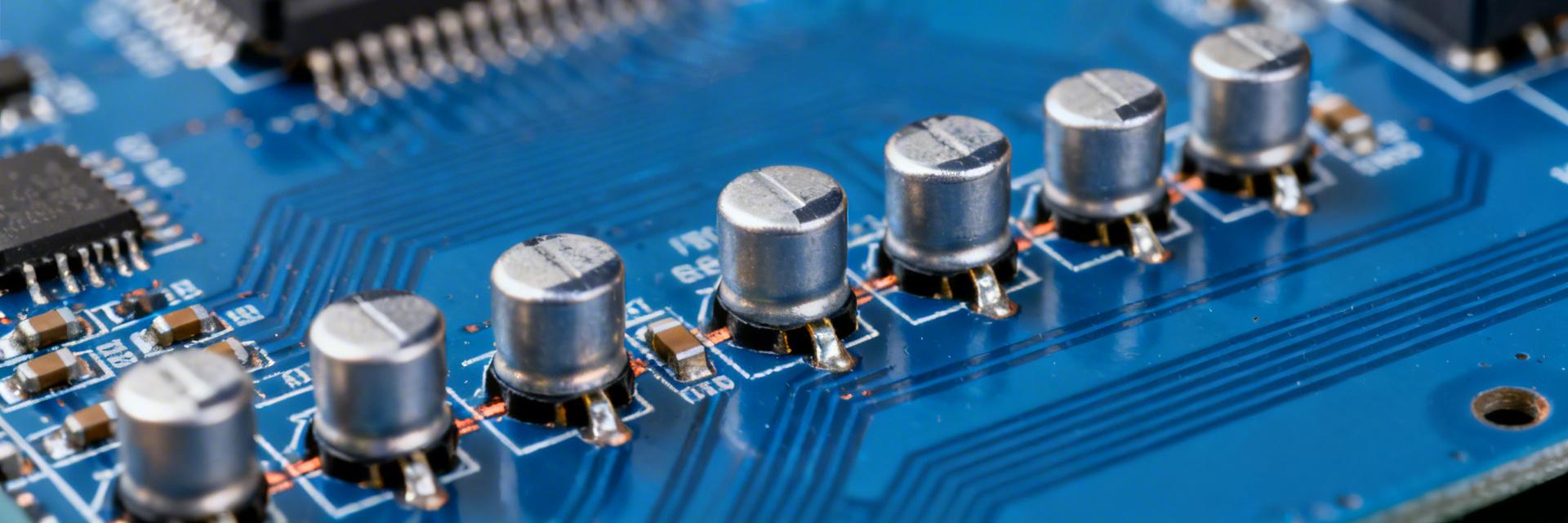
In modern electronic design pursuing extreme efficiency, power density—the power that can be processed or stored per unit volume—has become the core benchmark for measuring power supply performance. Higher power density means achieving stronger energy throughput in a smaller space, which is crucial for space-constrained applications.
Application Scenario Driven: Strict Demands from On-board Power Supplies to Server Power Supplies
Taking New Energy Vehicle OBCs (On-Board Chargers) and DC-DC converters as examples, their internal space is extremely compact, yet they need to handle thousands of watts of power. Similarly, in data centers, to fit more computing units into standard racks, server power supply sizes are constantly being compressed. These scenarios collectively point to one requirement: passive components like capacitors must provide higher filtering and energy storage capabilities within limited volumes to support higher switching frequencies and larger currents.
Limitations of Traditional Aluminum Electrolytic Capacitors: Trade-offs between Volume, ESR, and High-Frequency Performance
Although traditional liquid aluminum electrolytic capacitors have large capacitance and low cost, their Equivalent Series Resistance (ESR) is high, leading to large losses and severe heat generation at high frequencies. To reduce ESR, the electrode area often needs to be increased, which directly leads to an expansion of component volume. This contradiction between "high capacitance" and "low ESR, small volume" makes it difficult to meet the design requirements of next-generation high-power-density power supplies.
Technical Deconstruction: The Core of the GYF Series' 40% Power Density Leap
Conductive polymer hybrid aluminum electrolytic capacitors, especially the GYF series, achieve a performance leap primarily due to their unique "hybrid" architecture. It is not a simple material replacement, but a systematic reconstruction of the cathode and internal structure.
* Based on test data comparison under the same specifications and volume
Material Innovation: How Conductive Polymers Significantly Reduce ESR and Thermal Loss
The cathode material of traditional capacitors is electrolyte, which has limited ionic conductivity. The GYF series uses high-conductivity solid conductive polymer as the cathode material. The electronic conductivity of this material is several orders of magnitude higher than that of electrolyte, thereby reducing ESR to a fraction of traditional products or even lower.
Studies show that the application of conductive polymer cathodes can reduce the capacitor's ESR by as much as 70%-80% at 100kHz, which is the foundation for low-loss operation at high frequencies.
Structural Optimization: Extreme Volume Compression with High-Capacitance Foil and Thin Separator Design
While reducing ESR, the GYF series achieves higher electrostatic capacitance per unit volume by using high-specific-capacitance electrode foils. Combined with thinner yet stronger separator materials, the core can wind more electrode foils in a smaller space. This combination of "high conductivity materials" and "high density structure" allows for a significant increase in the capacitor's rated ripple current capability without increasing—or even while decreasing—its size, directly boosting the power density index.
Data Validation: Performance Parameter Comparison and Empirical Advantage Analysis
Theory needs data support. Comparing the GYF series with different types of capacitors on key indicators, the advantages are clear.
| Performance Parameter | Traditional Al-E Capacitor | Solid Polymer Capacitor | GYF Hybrid Capacitor |
|---|---|---|---|
| Rated Ripple Current (Typical) | Base (1.0x) | High (1.3-1.5x) | Ultra High (1.6-2.0x) |
| ESR (100kHz) | High | Ultra Low | Very Low |
| Capacitance-to-Volume Ratio | High | Low | High |
| Reliability / Lifespan | Average | High (Sensitive to Dry-out) | Ultra High (Humidity/Heat Resistant) |
Reliability Data: Long Lifespan (125°C 4000 Hours) and High Humidity Resistance Guarantee
Beyond performance, reliability is the lifeline of power supply design. The GYF series uses stable conductive polymers and optimized sealing technology, resulting in excellent lifespan performance at high temperatures. For example, under high-temperature load conditions of 125°C, its lifespan can reach over 4000 hours, far exceeding ordinary aluminum electrolytic capacitors. Meanwhile, its humidity resistance has been significantly improved, reducing the risk of performance degradation due to environmental humidity and ensuring long-term stable operation in harsh environments.
Design Guide: How to Maximize the Effectiveness of the GYF Series in Actual Circuits
Selection Points
Ensure sufficient margin for the operating voltage, typically selecting a rated voltage 1.2-1.5 times the actual operating voltage. Secondly, calculate the required capacitance based on switching frequency and ripple voltage requirements. Most importantly, verify that the rated ripple current of the selected model is greater than the maximum ripple current calculated for the circuit.
Layout Optimization
Thanks to the higher ripple current carrying capacity per capacitor, designers can reduce the number of parallel capacitors. For instance, where three traditional capacitors were previously needed in parallel, now only 1-2 GYF capacitors might suffice. This directly saves PCB area, simplifies layout and routing, and improves overall system reliability.
Future Outlook: Evolution Trends and Market Opportunities of Hybrid Capacitor Technology
Technical Frontiers
Next-generation technology will focus on the molecular structure design of cathode polymers, achieving higher conductivity and thermal stability through precise control of polymer chains. Intelligent packaging technology may integrate temperature or ESR monitoring functions to achieve digital monitoring.
Market Blueprint
With the explosive growth of AI servers, autonomous vehicles, photovoltaic energy storage, and high-end industrial equipment, high-power-density hybrid capacitor technology will become an indispensable core component, with market penetration expected to continue rising rapidly.
Key Summary
- ◆ Power Density Breakthrough: Increased power density per unit volume by over 40% through material and structural innovation; the core lies in using high-conductivity polymer cathodes to significantly reduce ESR and thermal loss.
- ◆ Comprehensive Performance Leadership: Achieved significant advantages in indicators such as rated ripple current, high-frequency ESR, and high-temperature lifespan (125°C/4000 hours), balancing high capacitance with small volume.
- ◆ Prominent Design Value: Allows for a reduction in the number of parallel capacitors, directly aiding the miniaturization and lightweighting of power modules while enhancing overall system reliability.
- ◆ Meeting Future Demands: A key solution for high power density requirements in automotive electrification, AI computing, industrial automation, and other fields, with huge growth potential.